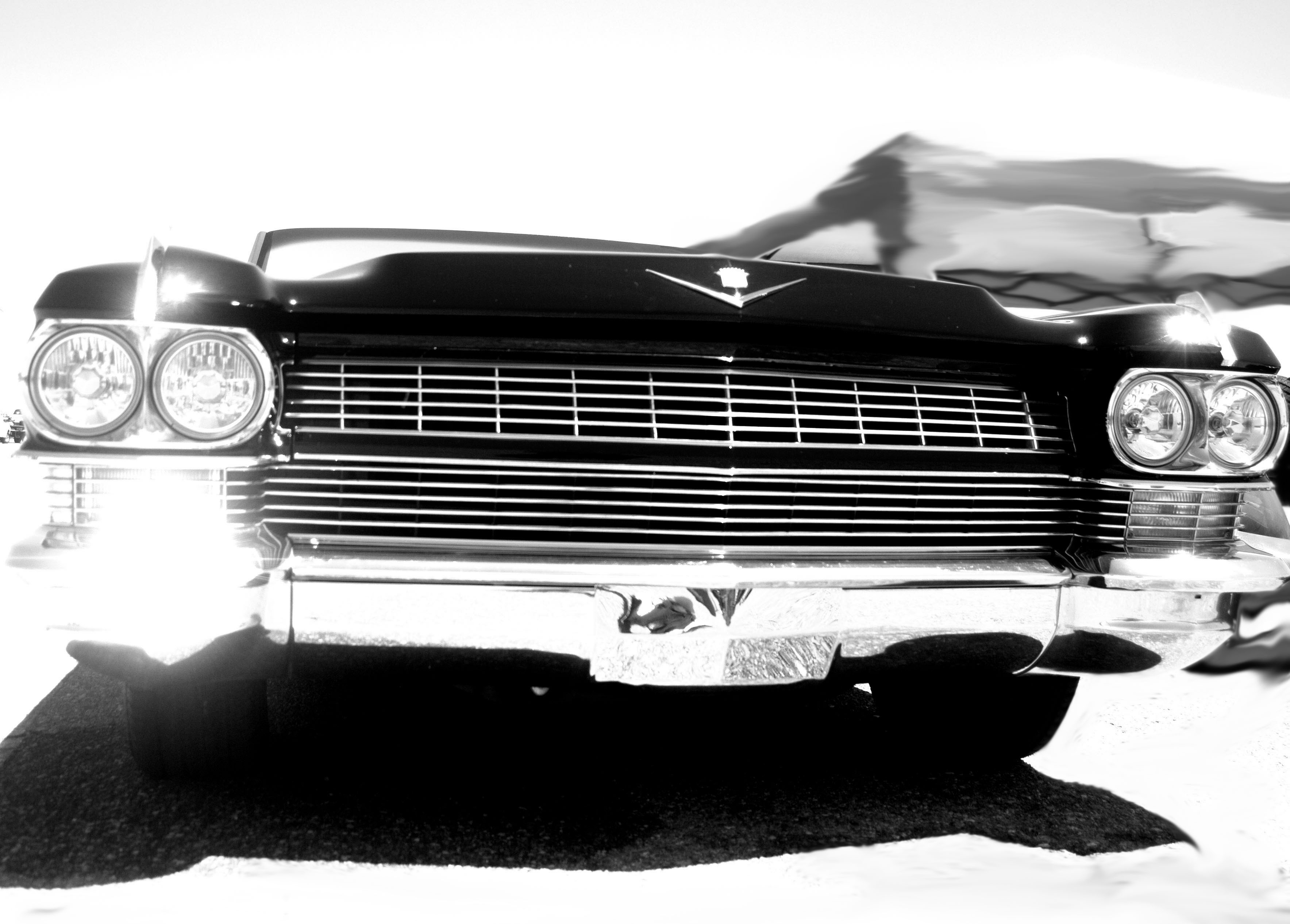
2014 Corvette Sting Ray – Convertible
You gotta love it!!!
Here’s the video.
2014 Corvette Sting Ray – Convertible
You gotta love it!!!
Here’s the video.
This is my latest segment. It will be a frequent blathering of car stuff – current and maybe some old stuff. I hope you enjoy it.
Bench seats started as the first front seats, clearly a hold over from the old ‘buck-wagon’. Over the years the bench was a stable, but has somewhat faded Well for American cars it comes to an end the last 2013 Impala, which is the last U.S. car and the 2014 Impala will have bucket seats.
I was really excited to see C-X75 Super Car for Jaguar back in 2010 at the Paris Car show. The car was to sticker at about 1.1 million dollars. However, it has been killed after just 3 prototyped.
Thanks for reading.
Tim
MCACN: 1952 Chevrolet 3600 Pickup Truck.

To seem more follow the link above to Classic Recollections.
I love the painted dash on this 52 pickup.
Thanks for reading.
Tim
Here is another compare between the cars.
Breaking seems to be the main issue.
Funny they differ on which car would be better on the street.
Quarter mile was a blow out.
Thanks for reading.
Tim

Some great info on these two cars. Not sure they should be compared together.
Thanks for reading.
Tim
Meet Jon, one of our engineers here at Prestolite Performance. He is the focus of our first installment of What We Drive, our series of stories about the cars of Prestolite Performance employees. Jon got into cars when he was about 13 years old. His first car was a 1986 Ford Tempo that he worked on, but never got it to the road. His college car was a 1989 Chevy S10, which he beefed up by replacing the original 4 cylinder with a V8.
Jon had been looking for a ’91 Camaro for some time, finding it difficult to locate one that wasn’t a rust bucket. In 2000, his search paid off and he purchased a nearly bone stock ’91 Camaro with only about 57,000 miles. The only performance upgrade on the car was a Flowmaster exhaust. Originally, the car made about 230 hp and 300 ft. lbs of torque.
The LB9 305 small block Chevy engine that was stock in Jon’s Camaro was removed to make way for a 355 small block. He hand ported aluminum Corvette heads and installed a Holley Stealth Ram intake with Mr. Gasket Ultra-Seal intake gaskets. Jon also made sure his engine was sealed for higher horsepower with Multi-Layered Steel head gaskets from Mr. Gasket. He made the engine even tougher with a forged ZZ4 crank, SRP forged pistons and a Comp camshaft.
Beefing up the drivetrain was also a priority so Jon installed a 4L80E transmission (built to handle 1000hp), Transgo shift kit, Lakewood transmission mount, SPOHN driveshaft, Detroit locker and Lakewood U-joints.
With twin 60mm Garret Turbos and his ACCEL 1000cfm throttle body and ACCEL Gen7 engine management system, Jon needed a hefty fuel delivery. His 5160FI fuel pump (now under Mallory) along with Mallory filters and high performance regulator provides the elite system needed for such a setup. For ignition, Jon used an ACCEL 300+ box with an ACCEL ultra coil and Extreme 9000 ceramic boot wires.
Now that Jon’s Camaro had been beefed up, he needed to harness the power with Lakewood 90/10 drag struts, panhard bar and control arms. He also needed better braking, so he installed 2002 SS Camaro brakes on all 4 corners.
All said and done, Jon’s beefed up ’91 Camaro now makes 700 hp and 800 ft. lbs of torque. That’s quite the improvement from stock.

Beautiful Car!


Now that’s some plumbing!!!
Posted By John Katz, June 25, 2012 in E-News, Engine & Drivetrain
From www.hotrodandrestoration.com
Stick Shifting
Meanwhile, manual-shift enthusiasts are upgrading to modern units packing more heavy-duty horsepower capacity—and more gear ratios.
“The generation that is now in their 60s can afford to build the cars that they wanted to build when they were in high school,” said Dick Hill, sales manager for Centerforce Clutches in Prescott, Arizona. And while those folks are not usually looking to build a race car, “they do want a four- or five-speed manual transmission,” he said.
More surprisingly, the trend extends beyond muscle cars and into traditional hot rods as well.
“I have friends who are building Deuce roadsters and they are putting LS motors in them, with a five- or six-speed manual transmission,” Hill said. “There are people who put Cadillac V-8s in 1949–1951 Mercs, and they want a stick. They want a three-pedal car. So that, too, is contributing to the growth of the high-performance clutch market.”
Hot rodders who already own or have owned multiple cars are now looking for something different.
“It’s like the people who buy their first Harley, they want it with every doo-dad they can get, where older bikers are turning back to the Knucklehead or even Flathead motors,” Hill said. “It’s the same with the hot rodder who already has two or three or four toys in the garage. The newest toy is going to be a stick car. And it’s for the same reason that someone will buy a brand-new Camaro, put 1,000 horsepower in it, and drive it on the street while blowing cold air and playing tunes. They want a manual not because they’re going to race it, but because they can have it. That’s what we hear all the time: ‘Because I can.’”
American Powertrain of Cookeville, Tennessee, sells a broad range of high-performance drivetrain components, from complete crate engines to driveshafts and pedals. The company also distributes Tremec transmissions.
“The hot market right now is for the Magnum six-speed in a classic muscle car,” said Gray Frederick. “The Magnum is Tremec’s replacement for the T-56 is the aftermarket version of what you would get in a new Shelby GT500 or Camaro SS.” Frederick added that people are putting them into classic Mustangs Cougars, Camaros Firebirds, Barracudas and Challengers.
“The cars that people spend the most money on are the cars that [are] getting Magnum six-speeds,” Frederick added.
The Magnum is available with two sets of ratios, with the closer-ratio unit being the more popular of the two.
“The wide-ratio box has a 0.5 overdrive, which is very tall; a lot of engines can’t pull that much overdrive,” Frederick said.
But when it comes to overdrive, isn’t more better?
“That’s a myth,” Frederick said. “You can say, ‘Alright, I’m at the ragged edge of my cam, where if I’m on flat ground I can hold 70 mph all day.’ In a perfect world, that would be great. [I]n the real world, at some point you’re going to have to slow down for construction, and then speed up again; or you’re going to hit a rise, or something else that causes your engine to run out of breath. [T]hen you’re going to have to shift and that’s what you’re trying to avoid.
“You want to put it in sixth gear and leave it sixth gear,” he continued. “You don’t want to run down the highway at your cam’s peak performance, which would be 3,000–4,000 rpm. But you do want an rpm where your engine can pull your car up hills, and pass without dropping a gear. If every time you put your foot in the gas the engine lugs and you have to shift, that becomes very inefficient. We’re helping the customer understand that, even on the highway, you want to stay in your powerband. Otherwise the overdrive doesn’t do you any good.”
Frederick recommends the wide-ratio unit mostly for torquey big blocks.
“A Pontiac 455 will pull a stump out of the ground at 800 rpm; it doesn’t have trouble pulling a car at whatever rpm you’re running,” he said. “A Mopar 440 and some other big blocks with a lot of low-end grunt can usually handle the taller overdrive, too. And of course we’re dealing with a lot of electronically fuel-injected (EFI) engines now, and most of them have computers that can cope with low rpm very well.
They can retard the spark, they can meter the fuel differently, they can do all kinds of things.
“We help the customer choose a rearend ratio and a gear set that’s going to give them the best performance, from top to bottom,” Frederick said.
Pedal Pressure Another concern, according to Hill of Centerforce Clutches, is the physical effort once associated with a high-performance clutch.
“Our customers all ask, ‘How stiff is the pedal?’” he said. “That’s why we’ve been very successful, whether it’s a single-disc clutch for mild upgrade vehicle, or dual-disc unit that can hold 1,300 lbs./ft. of torque, we’ve been very successful in making them streetable.”
The average consumer, Hill said, could climb into a car with a Centerforce dual-disc clutch, push the pedal to the floor, and not realize that the car was modified.
“[T]he person who has a $75,000 Camaro or Corvette wants race-car performance without the race-car effort, so this is pretty significant,” he said.
Still, selecting the optimal clutch for any particular application is a complex task best left to experts.
“There are different linings and different friction materials on the pressure plate,” Hill said. “Heat is a factor. The first thing you have to know is how the vehicle is going to be used. Drag racers realize they are going to drive their car until they break it, where hot rodders don’t beat their cars up as bad. They are very proud of their cars and they want to drive them, not break them. And unless the car has been tubbed, a street machine generally runs smaller tires, so you want to tune the clutch for that.”
McLeod Racing of Placentia, California, offers its RST and RXT Street Twin clutches, both double-disc units that hold up to 1,000 horsepower, with the pedal pressure of a stock clutch, said President Paul Lee. Contributing to this low effort—and to easier installation—are McLeod’s hydraulic release bearings, “which fit most applications, replacing worn and/or outdated mechanical linkages,” he said.
“We’re selling more clutches for vehicles from the 1960s and 1970s, and installing a new hydraulic clutch in one of these cars can significantly reduce pedal effort,” said Rich Barsamian, national sales manager for Advanced Clutch Technology (ACT) in Lancaster, California. The company also offers a wide range of clutches for GM, Ford and Mopar applications, each rated for torque at the crankshaft.
When installing an aftermarket clutch, Barsamian suggested, “be sure to use the right amount of lube on the input shaft—it is possible to use too much. Be sure parts are free from dirt and oil, and washed in a non-petroleum-based cleaner such as acetone, alcohol or brake cleaner. Be sure to follow the correct torque and tightening sequence when installing the clutch cover—and do not use impact tools.”
Thanks for reading Part 3 coming up.
Each July the tiny town of Iola, Wis., is invaded by a sea of humanity and old iron. Many in attendance come strictly for the swap meet, which covers about 4,500 spaces.
Old car hobby doing well — at least ‘parts’ of it
By John Gunnell
“Don’t tell me there’s no recovery going on,” said Kurt Kelsey, an Iowa City-based vendor of new-old-stock Pontiac parts. According to Kelsey, his business this year is much better than it has been in a long time. “The phone has been ringing off the hook every day,” he said.
Kelsey’s observation about an up-tick in the market isn’t alone. Positive reports have come from other vendors, parts manufacturers and catalog retailers since late last fall. Despite an unsettled national economy and high unemployment, the old-car parts business seems to be in the midst of a boom.
During a Dynamat seminar at the Hot Rod & Restoration Show in March, company owner Scott Whitaker said one-day shipping of Dynamat automotive insulation products has been impossible to promise lately, because a large increase in orders has outpaced new hiring. “The bump in sales wasn’t expected and caught us off guard,” he said.
In early April, Bob Marx at Marx Parts in Arpin, Wis., came to visit us and he, too, was upbeat about his rising sales. Marx has been growing his inventory of vintage gaskets and rear main seals and is now rebuilding fuel pumps, but he said that new products do not explain all of the growth he is seeing. Like several other industry veterans, Marx pointed to the TV exposure of the Mecum and Barrett-Jackson auctions as a factor that’s helping the hobby grow. “New people are getting involved with old cars,” he said.
“After a winter of inactivity, old cars tend to leak or fail when they are put back on the road,” said Fred Kanter of Kanter Auto Products, who wonders if the business boom might be seasonal. “March, April, May every year, it’s the same thing — spring,” Kanter said. He pointed out that from spring through summer every year, his most popular items are fuel pumps and water pumps. “There’s a lot of factors that affect our business.”
You never know what you’ll see at big swap meets. You might come across a 1958 Edsel Pacer looking for a new home.
Al Suehring of Amherst Junction, Wis., specializes in ring gears and is another vendor who feels that the market is strong. We caught up with him at the Vintage Chevrolet Club of America dinner in Chilton, Wis., and he said that his business from the United States and abroad has been showing noticeable increases lately.
Ray Yager of Classic Industries said the level of growth of reproduction parts sales is “hard to keep up with.” His firm supplies MoPar, 1955-’57 Chevy, Camaro, Firebird, Nova, Impala and Chevy truck parts, and parts sales for these vehicles are moving in a positive direction. Yager thought the company’s 18-month-old MoPar parts catalog may account for some, but not all, of the huge increase in business he’s seeing. At least one vendor who solely deals in Chevrolets is likewise seeing increases in business.
“I’m having a really good year,” said Ron Kellogg of Chevy Tri-Power. “Rather amazing since I’m selling restored multi-carb setups in an era of $5-a-gallon gas prices. I’ve probably sold 25 Tri-Power units — normally a year’s worth — since November 2011.”
Kellogg’s increase proves that car collectors still want high-performance options on their classics.
In addition to new products, increased TV exposure of the hobby and added catalogs, parts suppliers said both the use of the Internet and increased advertising seem to be attracting more customers. Some big companies such as Mid America Motorworks and Eastwood have begun sending daily e-mails to thousands of potential customers. This takes time and money and employees with Internet skills, but their efforts are paying off with increased sales.
Many mom-and-pop operations that can’t afford daily e-marketing efforts are creating websites, Facebook pages, blogs and Twitter accounts to reach the marketplace. Hobby events aimed at professionals — such as the Racing & Performance Expo, the British Motor Trade Association and the SEMA Show — all offer seminars on Internet marketing techniques to these businesses.
As their marketing efforts become more sophisticated, parts sellers are also discovering that they can use print media to drive customers to their websites. Companies that never ran a print ad before are discovering that a clean-looking space ad with the right design and not much text can generate strong client interaction. The right picture of a car can catch the potential customer’s attention and a simple e-mail address or website link is all that’s needed to bring business knocking. A good ad will pay for itself much faster these days.
While an increase in parts sales would suggest that restoration shops and collector car sales are both on the increase, growth in those parts of the hobby isn’t as clear-cut as it is when a part is “checked out” in an online catalog. Collector car dealers such as Colin Comer of Colin’s Classic Auto in Milwaukee and market players such as Joe Bortz are fairly universal in the belief that collector car prices are off 15-20 percent in today’s market. Some restoration shop owners say that they are busier than they’ve ever been, but others say the opposite.
From all of the indications we have seen and all the comments we’ve heard, it appears the old-car parts niche is improving for 2012 and this trend will presumably filter down to other parts of the hobby. The hobby is changing in many ways, and the wise businessmen in it are getting more sophisticated as the market grows.
Sources mentioned
Kurt Kelsey
NOS Pontiac parts
641-648-9086
Dynamat
automotive insulation products
www.dynamat.com
513-860-5094
Marx Parts
vintage gaskets
www.marxparts.com
715-652-2405
Kanter Auto Products
mechanical components
www.kanter.com
800-526-1096
Al Suehring
ring gears
715-677-3809
Classic Industries
restoration parts
www.classicindustries.com
714-847-6887
Ron Kellogg
most tri-power units
www.chevytripower.com
Joe Bortz
vintage vehicle sales
www.takeyourcartoauction.com
847-668-2004
Mid America Motorworks
Corvette and VW restoration parts
www.mamotorworks.com
866-350-4543
Eastwood
restoration equipment
www.eastwood.com
800-343-9353
Colin’s Classic Auto
vintage vehicle sales
www.colinsclassicauto.com
414-964-3747
Remember a few post ago that covered MOPAR’s in Sweden? (Short Link: http://wp.me/pKHNM-174) I wrote how interesting it was to see US sheet metal in other countries.
Well check out this car show in Rothrist, Switzerland. This is from Andres Palomares who lives in Bern, Switzerland. There are some great examples of US car history in this show.
Switzerland is beautiful and visited Interlaken several times while living in Europe.
Thanks for reading.
Tim