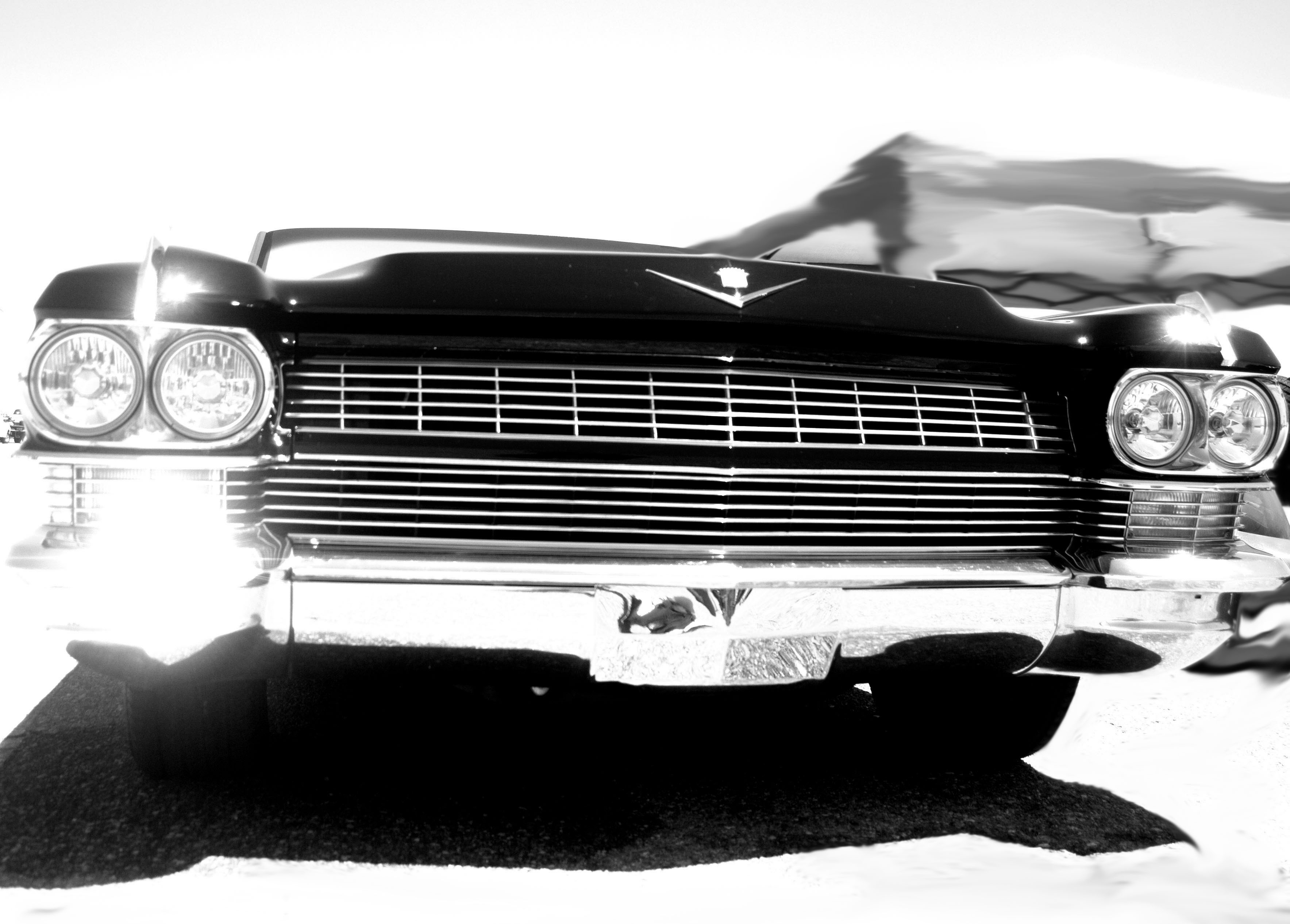
“Christine” 30th anniversary celebration coming to Carlisle | Hemmings Blog

I love book and the movie, and I even started considering collecting one.  When I was a kid (back in the early 70′s) across the road from our house, in a field, sat an old Plymouth Fury – can’t recall cars year but it did have fins.

I remember asking my Dad why we didn’t drive it and he said it needed a carburetor.  It seemed in my young mind’s eye that the carburetor wasn’t much more than a can looking thing with a butterfly looking think in the middle.  So I fashioned one out of a soup can and the metal dividers in an ice cube maker – yes kids it was before ice fell from a frig with a push of a button.

Stephen King said he chose a 1958 Plymouth Fury to play the inhuman title character in his book from the year prior because Furys “were the most mundane Fifties car that I could remember. I didn’t want a car that already had a legend attached to it like the fifties Thunderbird, the Ford Galaxies etc… Nobody ever talked about the Plymouth products.”

Enjoy this article at the link below (and go pick up a Hemmings periodical).  You’ll love them.

Christine_900

Thanks for reading.

Tim

Auto Factoids for Week of March 31st 2013

Let’s start with April 1st:

1961 the Amphicar debuted.

Amphicar - a flip of a lever and two propellers kicked in and made water-crossing a breeze.

Amphicar – a flip of a lever and two propellers kicked in and made water-crossing a breeze.

It was powered by an iron block and iron head  Inline 4 engine with 2 valves per  cylinder. It  displaced 1147 cc and had  2.72 x 2.99 bore and stroke with  8.0:1 compression produced 47 hp and 61 ft lbs of torque.

For years later one of the most important cars (although not this particular version) was introduced – the 1964 Plymouth Barracuda.  Little did Plymouth know at the time 6 to 8 years later the version of the ‘Cuda’ would break collector car value records.

1964 Barracuda - Glassback.

1964 Barracuda – Glassback.

Not the powerhouse that the 70′s versions were but it did have a V8 available that net you 180 hp.  Dubbed the “Glassback” because most of the slanted back was class (not unlike my 07 Corvette).

A few years later in 1970  AMC showed off their oddest car yet – the Gremlin. (Although the Pacer was arguably the worse.)  Ugly or not it was a good seller and it’s standard 6 cylinder was economical and produced 128 hp.  There were  872 2 passenger and 27,688 4 passenger made that year.

1970 Gremlin.  Fastback or 'no back"

1970 Gremlin. Fastback or ‘no back”


Also this week Mr. Walter Chrysler was born in 1875 on April 2 and Charles Hall patented Aluminum in 1889 on the same day.

In 1923 on April 5th, Firestone produced the first balloon tire.

Thanks for reading.

Tim


Common Upgrades For An LA318 In A 1971 Dodge Dart Swinger | Street Legal TV

MOPAR fans you are going to love this article.

I use to own a 1970 Dodge Dart with a 318 between the fenders.  I did a lot of body work to the life long New York State car, but nothing to the engine.  There’s one I should have kept, right along with the ’66 Impala, ’70 Chevelle and a couple others!!!

Some great upgrade in this one.


Common Upgrades For An LA318 In A 1971 Dodge Dart Swinger | Street Legal TV.

Thanks for reading

Tim

When You Just have to have that Classic/Muscle Car?…Think Small!!!!

This is a repeat – it got lost in the move to the new domain – I had to add it back to the archives so I could refer to it in my up and coming post on Model Cars.

I should throw “collecting” in the title of this blog (but it’s really long enough), because, although it’s about 2.5 months old, I have mentioned collecting a bunch of times.  But really that is part of hobby as well.

Of course if I were to list all the cars I’d love collect, it would be fairly long and in reality (my reality) unaffordable..unless you are Jay Leno… I hate that guy.  Ok..I don’t hate him…not really..the green-eyed monster made me say that.

Since I’m not as funny as Jay and I have to work for a living….what?…..ok..ok….I’m sure Jay works very hard…I guess…it’s tough reading funny newpaper clips….ok…Sorry Jay, I have “substituted” this alternative method of obtaining the cars I’d love to own.

You all figured it out yet?  I’m talking about models, scale diecast replicas.  There is an entire industry out there that produces, imports and markets these items.  Some of them are extremely well done.

Here are some shots of my collection.  I’m concentrating on the Mustangs and Corvettes in the sizes  1/18 or 1/24 scale.

These are a few of Mustangs

The Mustangs

And these are a few of the Corvettes.

The Corvettes
A Few of the Vettes

Most of these are Danbury Mint  and GMP pieces, I do like what they produce, lots of details and they are affordable (around $100.00 each).

Here is a few shots of the 1967 GT 350.

GT350
GMP 1967 GT350 Interior
Ford GT350
GMP Mustang GT350 Engine compartment

The Franklin mint produces cars, Greenleaf, Motormint, just to name a few.

It’s fun and affordable and they do increase in value.  It’s gotten so popular that even the mainstream car magazines like Hemmings (they normally have at least one article in every Motor News edition), Mustang Monthly and Corvette magazine have articles that discuss this portion of the hobby and even rate the quality of individual brands and their offerings.

If you collect already or want to get started drop a comment to this post. Toss in some pic as well.

Thanks for reading.

Tim

Mopar Door Panel Project – The LeBaron Part 2

Let’s finish up the coverage of this project.

As you as in the Part 1 we ran into some issue with the clue holding on some critical parts of the door panel, like the part that holds up on sub-panel that holds the controls for the window, locks and mirror remote.  Also needing attention was the vent channel that push air to driver’s window to defog it.

I wanted this fixes to be permanent and it was clear that more glue wasn’t going be a long-term fix.  There isn’t much that makes up the door panel, it was only about 1/4″ thick. Now I know it might make folks cringe, but it was necessary, I used very small (short) hobby screw.

Here are some pics:

This first pic is showing the actual problems.

PANEL2The two “A”s are showing the two clips on the back of the brace that accept the male part of the clip from the panel that holds all the controls.  Without begin attached the back of the door panel the control flop around and slide out-of-place.

The “B” and arrow highlight the issue.  There the glue let go and you can see the gap.

IMAG1691

Here you can see the vent channel.  This posed a bit of an issue because the door panel is thin here and on the outside there is a locking ring that is mainly a decorative actually had locking prongs, which as a result of the glue no longer holding fast, broke off and I had to JB Weld them back on.  In this pic you can see one of the screws I used to put every thing back together.

IMAG1684

Here is a close up of the one of the screws.  In the lower left you can see on of the blobs of glue that came loose.

This was a really easy repair, however, we didn’t resolve the window issue.  So we’ll pull the right side door panel and see if we can fix window issue and as long a we’re in there we’ll shore up the braces.

Thanks for reading.  Leave a comment.

Tim

Drive By 1938 Chrysler Royal

Here is another drive by.  As you know these are in fact drive by – but shooting with a camera!!!!

We saw this on near down town Tucson, Az.

Royal1royal2

She needs a little work but it seems the owner drives it.  I love the suicide door and the 9 windows!!

The Chrysler Royal was an automobile produced by the Chrysler division of the Chrysler Corporation between 1937 to 1942 and 1946 to 1950. The Royal represented the entry-level Chrysler during its production,[1] making it the most affordable Chrysler model. The Royal was replaced at the end of 1950 model year by the Chrysler Windsor.

Own one of these?  Drop me a note.

Thanks for reading.

Tim


Highlight Car – Jensen Interceptor

Call me crazy, but I love these cars.  I have only seen one in running condition and it was well restored.  I’d love to own one.

The Jensen Interceptor debuted in 1966, but not originally – that was back in 1950 (I’ll cover those in a separate post.).  These hand-built in Kelvin Way Factory, West Bromwich  in the England from 1966 – 1976.   The body style designed by Carrozzeria Touring of Italy and changed from fiber glass bodies to steel.

1966 Jensen Interceptor

1967 Interceptor

So what was this car made of?   Let’s take a look.

Engines:

These cars were by….wait for it…………………..Mother MOPAR!!!

Yup these cars sported a Chrysler V8.  The Mks I – III  used either the 6.3 or 7.2 liter engines.

The 1966 started with the 383 CID which continued through 1970 knocked out 335 hp.  The 383 was nurtured in 1971 dropping down to 250 hp.  So Jensen decided to use the 440.  They offered to versions, one had a 4bbl  Carter carb making about 305 hp.  The second  was topped with three 2 barrel Carters and pushed 330 hps out of the block – we know this engine as the 440 Six Pack – only 232 of these were produced.!!!

In 1972 the 440 suffered the same fate as the 383 – the Six Pack was no longer available and the 4 barrel was de-tuned to 280 hp and again in 1976 dropped to 255.  Jensen continued to use the engines.

Transmission:

The Jensen team selected the Chrysler’s TorqueFlite 727 automatic (3 speed) and 4 speed manual.

The curb weight was between 3500 – 3600 hundred pounds (about the same as a 1969 Cuda).

Other features:

Electric windows

Reclining front seats

Wood rimmed steering wheel

Radio with twin speakers

Reversing lights

Electric clock

Power steering  (after Sept ’68)
Jensen produced the Mk I, MK II and MK III from 1966-1974.  They came in 2 door convertible, hatch back and coupe.

Jensen Interceptor ‘Vert


Power specs:  0-60 in 6.4 seconds and top speed 137 mph (oh…I’m betting it would do better than that).


From Wikipedia:

Variants

A convertible with powered soft top was introduced in 1974 mainly intended for the American market but also sold in Europe. 267 convertibles were made.[3]

Rarer still is the Coupé version with just 60 made,[3] derived from the convertible and therefore without the distinctive rear window of the regular car that was introduced in 1975, a year before the company’s demise.

Jensen FF

Main article: Jensen FF

Jensen were one of the first manufacturers to equip a production car with four-wheel drive, in the 1967 Jensen FF (Ferguson Formula). At the time it was hailed as a remarkable development, coming also with Dunlop Maxarat mechanical anti-lock brakes and traction control. The car is five inches (127 mm) longer than the Interceptor, and although looking virtually the same the extra length is identified by an additional side vent ahead of the doors on the front flanks, an extension to and additional swage line in the leading edge of the front wing (fender). Press articles from the time quote “drag-strip” performance when describing the car. In total 320 FFs were produced; 195 Mark I, 110 Mark II and 15 Mark III. [4]

The Jensen Interceptor R

A Jensen specialist based at Cropredy Bridge rebuilds original Interceptors using modern components.

In May 2010, Jensen International Automotive was set up, with the financial backing and know-how of Carphone Warehouse founder and chairman Charles Dunstone who joined its board of directors. A small number of Jensen Interceptor Ss, which had started production under a previous company, are being completed by Jensen International Automotive (JIA), in parallel with JIA’s own production of the new Jensen Interceptor R; deliveries of the latter have started (beginning of 2011) at the Oxfordshire-based manufacturer and restorer. Tony Banham is JIA’s Managing Director.


The New Interceptor? Jensen Interceptor XL concept!!


Thanks for reading.

Tim.


Drive By – 1966 Plymouth Barracuda

The Drive By is new way to spotlight cars.  As the name states these are cars that I see where ever I’m traveling.

The 1966 Barracuda wasn’t much when compared to the 1970′s younger brothers.

1966 Barracuda – old school.


Often referred to as the Formula S – 2 door coupe fastback with the V8.  I don’t know if this one was the V8, I would have had to see the if it was badged properly to determine. (Small medallion placed below the ‘Barracuda’ script.  The V8 would have been the Commando 273 CID with a two barrel carb – about 235 hp and a 10.5:1 compression when topped with a 4bbl Carter AFB..  The 6 cylinder was the Valaint Signet slant 225 CID with about 145 hp with a single barrel carb.  They came in convertible as well – only 2570 of those were produced.


Thanks for reading.

Tim