I don’t know what it is about abandoned car, but they seem to grab my attention. I can spot them “a mile away”. Behind out-buildings, stashed in old barns or just sitting in a field somewhere.
Beside being a history buff (and a history teacher) I know a lot about the cars and their history, but a single car has is ‘personal’ history. Where as it been, who owned it and how was it used? I have a very bad inclination to immediately begin to assess an abandoned car’s potential. What could it be, again?
Not much mystery to what these cars were used for. These were sitting out in the back area of a local race track. Totally spent as race cars….OR….are…they?!?!?!!?
Clearly this one started out as a Camaro.
Lots of make-shift sheet metal but again a Camaro or Firebird .
Just a shell of what it used to be. But I bet it can be brought back to life.
Just need a seat!! Oh..and an engine, transmission and gauge need to be but back in place!!
Just need a little sanding and some clear coat! Right?
Got an abandon car pic you want to share? Find me on Facebook and post it up.
Along with the Ford Mustang and Dodge Challenger, the Chevrolet Camaro is one of the most recognized American muscle cars. But ever since the fourth-generation Camaro was released in the early ’90s, the iconic U.S. car has been manufactured in Canada.That will end when the last 2015 Camaro rolls off the General Motors Canada assembly line in Oshawa, Ontario, on Nov. 20. The 2016 Chevrolet Camaro that goes on sale in the fourth quarter will be made in Lansing, Michigan. The shift is part of a $5.4 billion package of investments General Motors has slated for its U.S operations over the next three years.ADVERTISINGGM said last week it would invest $175 million to upgrade its Lansing plant to accommodate the new Camaro, which will go on sale in the fourth quarter. The vehicle will be built on the same platform in Lansing as the Cadillac CTS and ATS midsize and compact luxury sedans.
UPDATE 10:00 a.m. – General Motors is gearing up for the 2016 Camaro to be built at the Lansing Grand River Assembly plant. In a morning news briefing, GM officials said 500 workers would be added into a second shift to …
The renovations to the Lansing Grand River Assembly Plant include three new paint systems for the 2016 Camaro and two robotic framers. GM is vying for the top spot in the pony car market with the redesigned, amped-up …
If you haven’t seen it yet, here’s the video of the Jalopnik journalist hitting the wall with a 2016 mule Camaro. Enjoy and then check below for my commentary.
Clearly the guy felt bad and a little shaken up, but the reality is, he shouldn’t have driven the car. If you just look at the beginning frame of the video or notice the position of his arms just before he hit the wall, you can tell there the skill set just isn’t there.
I auto cross my cars – my C4 when I had it and my C6 now (not to mention my drag racing stint with my Mustang). I’ve attended my SCCA Solo courses and even attended some training with Bondurant at Phoenix International Raceway with Formula 1 cars. And what I’ve learned is that you must have more than just enthusiasm over a new car, especially a powerful one. You have to have some driving skills and you must have respect for the car’s abilities and know yours.
Here is a parallel event I was part of with my corvette club. We rented a part of the Bondurant facility to have an auto cross event. It included all generations of Corvettes as well as a few other non-Corvette vehicles. One of our members just purchased a brand new C6 and was very eager to run the course. Short version of the story is – he lost it on his second run, went through the chain-linked fence at a post and got the car hung up on the concrete footing. We had to dig him out and the Bondurant crew weren’t all that happy. Clearly he wasn’t ready for the abilities/power of his C6 even though he had the enthusiasm (and for pete’s sake keep the traction control on until you are used to the car).
Don’t get me wrong, accidents happen, just watch any F1, drag or NASCAR race and you’ll see professional skilled driver hit the wall. It happens.
Now back to the Jalopnik incident. If you watch the video you can tell the journalist seems pretty excited. However his driving skills seem a bit off in a number of ways. For instance, his sitting position is off, especially for track driving (maybe he’s just super tall or the mule car is not equipped with adjustable seats) for one. You can tell by his expression in a corner, prior to his last corner and the contact with the wall, that he was at he edge of his abilities with that particular car. As he goes into the now famous turn his arms cross – I didn’t realize a human could contort himself that much!!
I also found interesting was some of his commentary leading up to the crash with words like “rolly-poely”, “composed”, “nimble” especially in light of his comments that he was there to discuss the how it handles at the track. You must have the ability to test those things to give your readers a comparison and the proper (or more familiar) terminology helps e.g., replace “rolly-polly” with “body roll”. Wouldn’t GM want that too or at least his publisher?
There was a comment in his piece where he gave full disclosure, stating that GM wanted him to drive so badly, that they flew him out and paid for food and booze. Don’t know if that’s ‘special’ or standard fare. I also didn’t understand his comment – “GM asked me to leave the track” and they had to continued the video out in the street – seems a tough way to deal with someone, you really wanted there. Hopefully, GM doesn’t want their money back for the airfare or bill him for the damage to the mule.
Now I’m not a great blogger nor the greatest driver, but I do have car guy experience (including testing new models in a small auto cross scenario) and a fair grasp of the my native language. I’m not sure what all of his credentials are, he did say he had some track time, and I did look over some of his other entries and gained my own opinions.
It suffices to say that I much prefer a “car guy turned journalist” vs. “journalist turned car guy”, especially when to reading ‘car guy’ stuff and certainly for reviews like this one.
I do feel badly for him and GM and but I’m also sure it wasn’t the first time on media day that a writer dented one of the cars. He just had his published. And thank the auto gods that he wasn’t driving a Z28!!! I would have wept opening.
The 2016 Camaro SS is powered by a Corvette Stingray-sourced 6.2-liter V8 that produces 455 horsepower and 455 pound-feet of torque. By comparison, the 2015 Camaro SS has 426 horsepower and 420 pound-feet of torque. No matter the engine, the …
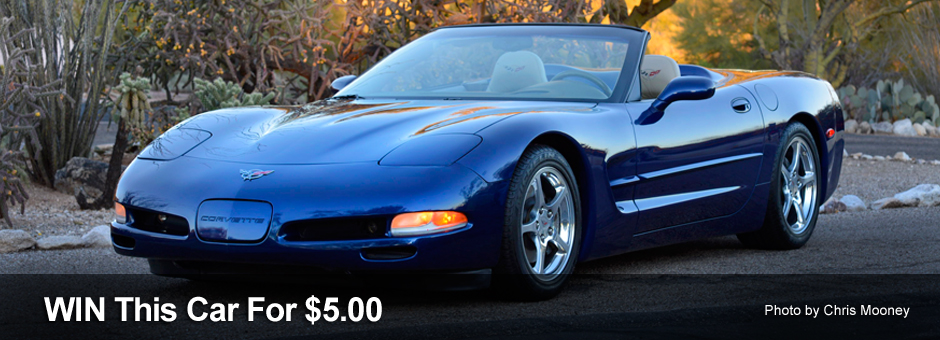
I kid you not…this is one of the most enjoyable car shows. You get to park your classic, muscle, racer, import or special purpose vehicle on the grass (yeah…lots of it) – no nasty dirt or melting tar parking areas. Grab that blanket out your trunk and spread out under a tree and enjoy!!!!
Oh….did I mention that for $5.00 you get into the show and you get a change to win this!!!!!
What if you could switch your supercharger on and off with the flick of a switch? Many gearheads have had that dream ever since it was seen in the Mad Max movie in 1979. The aftermarket was slackin’, but 34 years later, Procharger has made it real. Or close.
The all-new i-1 supercharger is a belt-driven centrifugal deal like Procharger is known for, but this one can be programmed for the boostcurve of your choice by way of a computer-controlled constantly variable transmission (CVT) that changes the blower-drive ratio dynamically. The i-1 blower has a 8:1 gear-driven reduction augmented by the CVT that runs between 0.6:1 and 1.9:1. The drive ratio alters the blower speed and therefore changes the boost.
How is this Mad Max-like? Because you can dial a low 1 or 2 psi for driving around town and then crank it up to the blower’s full potential of around 850 hp, all on the fly. You can also custom-shape a curve to your liking, overdriving the blower at low engine speeds for more bottom-end power, and then tapering it off to ensure you don’t get into overboost. You can also create a flatter boost curve than you would normally see with an rpm-dependant centrifugal blower There are three modes out of the box: Touring for 1-2 psi, Sport for a medium- aggressive boost curve, and Competition for all-out power.
Procharger CEO Ken Jones told us that the i-1 was tested back to back with the company’s mainstay P1SC at the drag strip. The older blower ran 120 mph and the new one ran 122—that’s not due to the CVT, but because of a refined compressor housing.
Ken also says ’10-up CamaroSS will be the first available application, but company insiders have been driving around in 5.0 Mustangs, Corvettes, late-model Mopars, and F-150 trucks. We’ll throw out a guess that the 5.0 Mustang kit will be the next to market.
This is the most creative new product launch we’ve seen so far at SEMA 2012, and HOT ROD is already scheming an interesting way to test one of these things. Meanwhile, you have to check out the video to really understand how cool it is: